The ISA Certification Difference: Why It Matters Who Climbs Your Tree
If you’ve driven around Beaufort County lately, you’ve probably noticed no shortage of trucks with a chainsaw logo slapped on the door, offering tree removal at a price that seems too good to pass up. Some of these outfits do solid work. Many don’t have a single certified arborist on the crew — and that gap can cost you far more than the discount saved.
At Southern Tree Services of Beaufort, Inc., every climber on our team works under ISA-certified arborist standards. Here’s what that actually means, and why it’s worth asking about before anyone puts a saw to your trees.
What ISA Certification Actually Requires
The International Society of Arboriculture (ISA) is the industry’s recognized credentialing body for tree care professionals. Becoming ISA-certified isn’t a weekend course — it requires documented field experience, a rigorous exam covering tree biology, diagnosis, and safe work practices, and ongoing continuing education to maintain the credential. It’s the closest thing the tree care industry has to a licensed standard, in a trade that, in South Carolina, has surprisingly few state-level barriers to entry.
That last part is the real issue. In many states, including South Carolina, virtually anyone can buy a chainsaw, a truck, and a website and call themselves a tree service the next day. No license. No required training. No test of whether they actually understand tree biology, structural risk, or how to safely work at height. The plurality of tree companies operating in the Lowcountry right now fall into that category.
What You’re Actually Risking With an Uncertified Crew
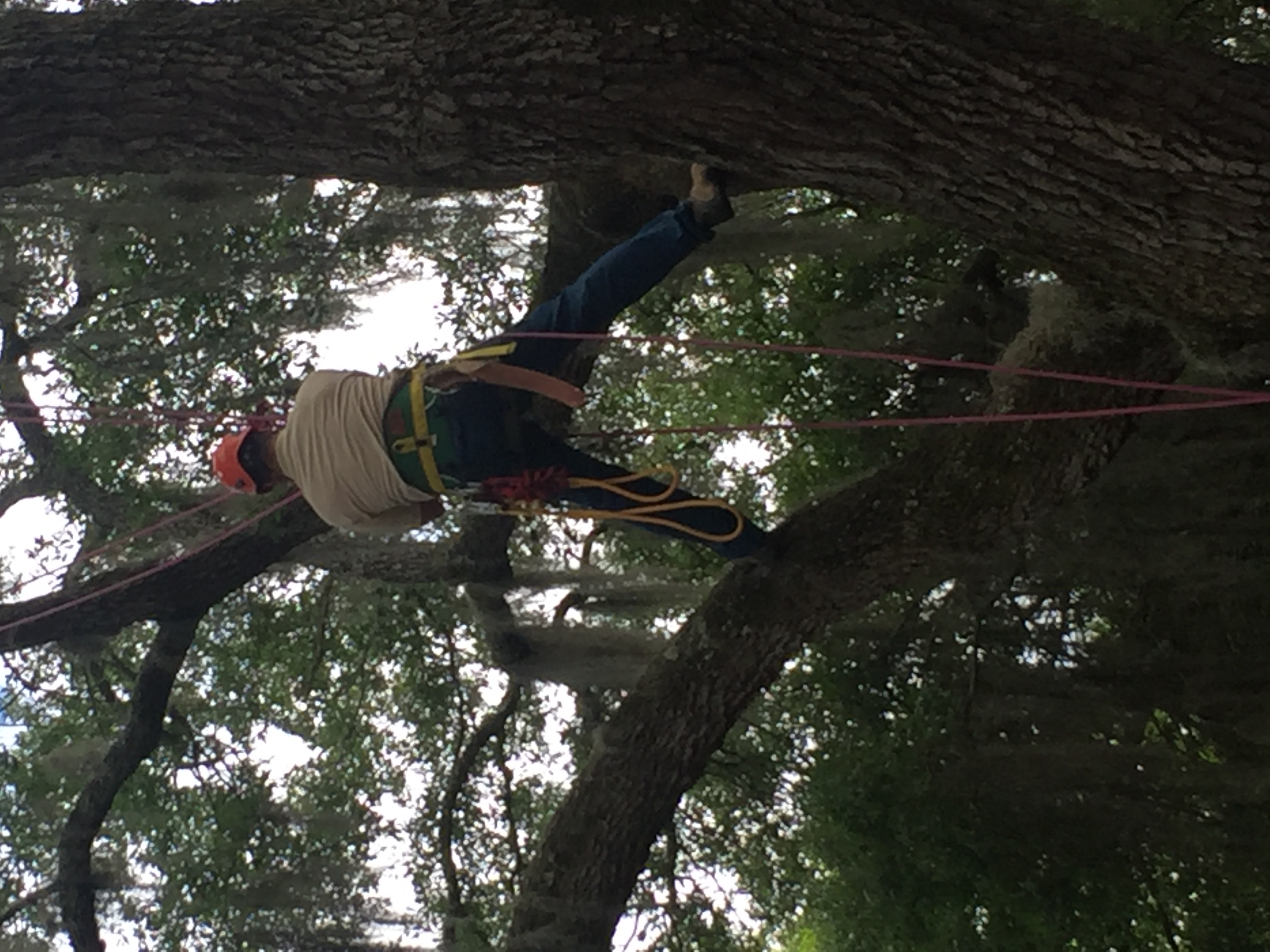
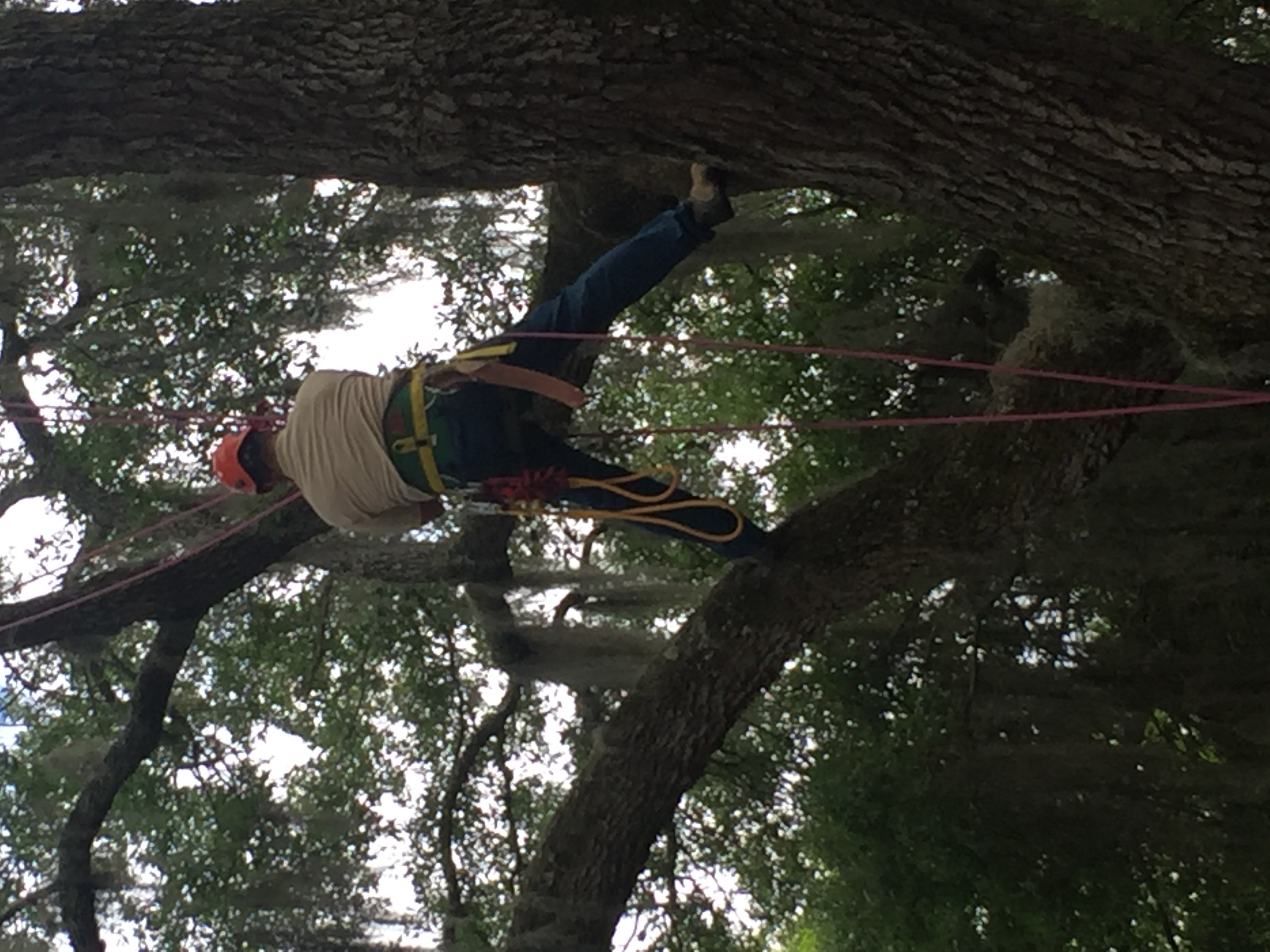
This isn’t about snobbery over a credential — it’s about what happens when the person 40 feet up your live oak with a running chainsaw doesn’t fully understand what they’re cutting into.
Property damage. An uncertified climber may not recognize load-bearing limb unions, lean direction, or decay patterns — mistakes that can send a limb through a roof, fence, or car instead of where it was supposed to fall.
Injury liability. Tree work is consistently ranked among the most dangerous trades in the country. If an uninsured or improperly trained crew member is hurt on your property, you may be exposed to liability you didn’t sign up for.
Tree health damage. Improper pruning cuts — topping, flush cuts, over-thinning — don’t just look bad. They create entry points for decay and disease, and can shorten the life of a tree that took decades to grow. A bad pruning job often isn’t visible as a problem until years later, when it’s too late to fix.
No accountability. Without industry certification, insurance, or a real business history, there’s often little recourse if something goes wrong. A truck with a magnetic sign and a cash-only policy tends to disappear when a claim comes in.

Photo: Zack Masters / Unsplash
What to Ask Before You Hire Anyone
If you’re getting quotes for tree work — and we’d encourage you to get more than one — a few questions will tell you a lot about who you’re dealing with:
Is your climber ISA-certified? Ask for the certification number; it’s verifiable through the ISA’s public database.
Are you insured for liability and workers’ compensation? A legitimate company should be able to provide proof without hesitation.
How long have you been operating in this area? Longevity is a decent proxy for accountability — a company that’s been here for years has a reputation to protect.
Will you provide a written estimate? Verbal-only quotes with no documentation are a common thread among unlicensed operators.
Why This Matters More on the Coast
Lowcountry trees — mature live oaks especially — carry real value, both aesthetically and in property worth. These aren’t trees you get to grow again in your lifetime if a bad cut or improper removal takes one down prematurely. Add in our hurricane-driven storm season, where structurally sound trees matter more than ever, and the margin for error from an inexperienced crew shrinks even further.
Southern Tree Services has spent over 30 years serving Beaufort with ISA-certified arborists who know Lowcountry species, soil, and storm risk — not a generic playbook brought in from somewhere else.
Before you hire a tree service, ask the question that actually matters: who’s climbing your tree, and what do they actually know? Southern Tree Services of Beaufort offers free estimates on removal, pruning, and more, done right the first time. Call us at 843-522-9553 or visit us at 56 Sheppard Rd., Beaufort, SC 29907.
